
"Latin America coffee origins"
500 article(s) found

Introduction to the description and treatment of taste and flavor in the characteristic producing areas of coffee farms in Latin America
El Salvador aroma 4% brightness 4.5% mellow 3% flavor 4.5% aftertaste 4.5% suitable for baking degree: if City/Full city city has a preference for thick flavor, it can be roasted a little deeper. Most people think of El Salvador as a war.

Description of characteristics and Flavor of Coffee beans in Latin America introduction of varieties produced by grinding scale
The characteristic flavor description of Latin American coffee beans, grinding scale production area variety introduction was once the second largest coffee producing country only in Brazil, but Colombia, which has been surpassed by Vietnam and ranked third in the world, is the largest supplier of washed beans in the world. Colombia has become synonymous with good coffee after years of image building. Although the flavor is balanced, the texture is thick and there is

Introduction of boutique coffee beans Latin American coffee
Latin America (Latin America) in 1721 French naval officer de Klee (Gabriel Mathieu de Clieu) experienced difficulties and obstacles to bring the first coffee sapling from Africa to the Latin American island of Martinique, which was the origin of coffee cultivation in Latin America. Because at that time, France was under the reign of the Bourbon dynasty, and Elaraby was grown in Latin America.

Elegant fragrance of Sanrita estate fine coffee beans grinding degree roasting treatment method
Vietnam now produces more coffee than Colombia in Asia, and Indonesia has grown to become the world's fourth largest coffee producer. In 1721, French naval officer Gabriel Mathieu de Clieu took the first coffee sapling from Africa to Martinique in Latin America. All this is Latin American coffee

Boutique coffee Tarasu Latin American coffee from the capital of Costa Rica
Located in the south of the country's capital, San Jose, Tarasu is one of the most valued coffee growers in the country. La Minita Tarrazu coffee is a famous local product, but its production is limited, about 72600 kilograms a year. It is grown on a piece of land called La Minita, which is owned by the McAlpine family of England.

Traditional coffee drinkers in southern Europe and Latin America
People in the Middle East are obsessed with the basic way of drinking, roasting coffee beans deep to near dark (DarkRoast), usually ground into a very fine powder, and then boil several times and then add sugar to form a small cup of coffee that is extremely thick, bitter, sweet and precipitated. People sipped this small cup of coffee in an elegant and courteous manner. Southern Europeans and urban Latin America

History story of Colombian coffee beans in the gentle countryside of Latin America Colombian coffee flavor
Exchange of professional baristas please pay attention to the coffee workshop (Wechat official account cafe_style) Latin America gentle Colombia mixed beans to present Colombia Colombian Mild as the main axis, Colombia's coffee beans are world-famous for their high quality, Arabica is the country with the highest yield, coffee trees are mostly planted in the highlands, cool and wet, which is the most favorable natural environment for coffee growth.

How do you drink Latin American coffee? What are the characteristics of Latin American coffee?
Professional coffee knowledge exchange more coffee bean information Please pay attention to the coffee workshop (Wechat official account cafe_style) with the improvement of the quality of life, enjoying coffee has become a fashion of life today, as for how to taste a cup of coffee is a profound knowledge, what is the difference between the knowledge of coffee and the taste of the place where it comes from? Coffee should be the most common pick-me-up in the world.

Latin American Coffee Bean Characteristics Latin American Coffee Flavors
Latin America In 1721, Gabriel Mathieu de Clieu, a French naval officer, took the first coffee sapling from Africa to Martinique in Latin America. All this is the origin of coffee cultivation in Latin America. Because France was under Bourbon rule at that time, Latin America was planted

Flavor characteristics of coffee beans from three continents
The flavor characteristics of coffee beans on three continents The origin of coffee cultivation in Latin America was introduced in 1721 when Gabriel Mathieu de Clieu, a French naval officer, took the first coffee sapling from Africa to Martinique in Latin America. Because France was under the Bourbon dynasty.

Characteristics of coffee beans in Latin America an introduction to the stories of the three major coffee bean producing areas in the world
Latin American coffee beans used to be the second largest coffee producer after Brazil, but Colombia, which has been overtaken by Vietnam and ranked third in the world, is the world's largest supplier of washed beans. Colombia has become synonymous with good coffee after years of image building. Although the flavor is balanced, the texture is thick, there is a famous sour taste, and the aroma is fine, but taste it carefully

Introduction to the flavor and taste characteristics of American Hawaiian Kona coffee in Latin America
Hawaiian coffee is the only top variety produced in 50 states in the United States, and the United States is naturally the largest market.

The first choice of coffee in Latin America: an introduction to the description quality of manor flavor in the country.
Latin America's first choice coffee Mexico (Mexico) aroma 3 points brightness 4 mellow 3 points flavor 4 points aftertaste 4 points suitable for baking: Full cityfull city, roasted to the beginning of the pot, whether mixed with the formula to make Espresso or brew a single product, Mexican coffee beans can be said to have a unique flavor. Mexican coffee from Cottpe and Veracruz in the north to the middle

Coffee culture story The origin of German coffee
In 1721, Germany's first café was founded in Berlin. Cafes in Germany have just begun to flourish and are subject to many restrictions by local authorities. Therefore, compared with other countries, the development of German coffee is relatively single. It wasn't until the early 19th century that coffee became one of the best money-making tools available to Germans. Coffee growing in Latin and Central America in the mid-19th century
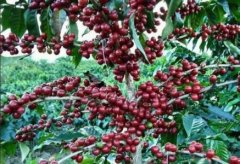
A brief introduction to the cultivation of high-quality boutique coffee beans in Santa Rita Manor, geographical location, climate and altitude
Growing coffee also requires daylight and proper shade, which is most suitable for planting on fertile soil or volcanic ash soil. Therefore, the origin of coffee is widely distributed in South America, Central America, the West Indies, Asia, Africa, Arabia, the South Pacific and Oceania. Such as Ethiopia and Tanzania in Africa, Brazil, Colombia, Jamaica, Guatemala and Mexico in Central and South America.
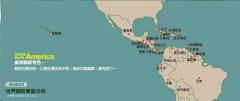
Latin American coffee introduction to coffee producing areas
Latin America (Latin America) in 1721 French naval officer de Klee (Gabriel Mathieu de Clieu) experienced difficulties and obstacles to bring the first coffee sapling from Africa to the Latin American island of Martinique, which was the origin of coffee cultivation in Latin America. Because at that time, France was under the reign of the Bourbon dynasty, and what was grown in Latin America

Flavor characteristics of coffee beans in Latin America is the price of coffee beans expensive in Latin America
Professional coffee knowledge exchange more coffee bean information please pay attention to the coffee workshop (Wechat official account cafe_style) Latin American coffee bean flavor characteristics: balanced, moderately sour and mellow South American bean flavor: generally speaking, the flavor is relatively regular. Among them, Brazilian coffee is soft and sweet, Costa Rican coffee is mild and supple, sour, sweet and chocolate

Introduction to Latin American Coffee from Fine Coffee producing area
Latin America (Latin America) in 1721 French naval officer de Klee (Gabriel Mathieu de Clieu) experienced difficulties and obstacles to bring the first coffee sapling from Africa to the Latin American island of Martinique, which was the origin of coffee cultivation in Latin America. Because at that time, France was under the reign of the Bourbon dynasty, and Elaraby was grown in Latin America.

Tarasu Latin American coffee Costa Rican coffee the mountains of central Costa Rica
Make a cup of Costa Rican coffee, pour it into the cup and taste it carefully, then you can appreciate its unique fragrance and rich flavor. The soft, moderate sour taste and rich aroma make the final rhyme reverberate in the throat for a long time, unforgettable. It has even been commented that some of the flavors of Costa Rican coffee are very similar to those of Kona and the Blue Mountains of Jamaica. Costa Rica's coffee industry was originally made up of

High-quality Sanrita Estate Coffee Bean Origin Development History Culture Introduction
Colombia coffee varieties are mainly small coffee. Plants are small trees or large shrubs, 5-8 meters high, usually multi-branched at the base; old branches are gray, nodes expand, young branches glabrous, compressed. Leaves thinly leathery, ovate-lanceolate or lanceolate, 6-14 cm long, 3. 5 -5 cm wide, apex long acuminate, acuminate part 10-15 mm long, base cuneate or slightly obtuse, rarely rounded, entire or rounded